eD-TEC’s all-electric eD-QDrive 1 tops 40 knots in Croatia in second phase of testing
Creating a pioneering, all-electric marine drive solution takes a lot of belief


Creating a pioneering, all-electric marine drive solution takes a lot of belief
- eD-TEC, manufacturer of holistic marine e-drive platforms, is in the testing phase of its eD-QDrive 1 high-performance electric drive unveiled in September 2022
- The all-electric eD-QDrive 1 completed three weeks of further intensive testing in Croatia during May 2023
- The eD-TEC Believer Team has been tweaking and optimising the eD-QDrive’s systems and software, and has solved several technical challenges
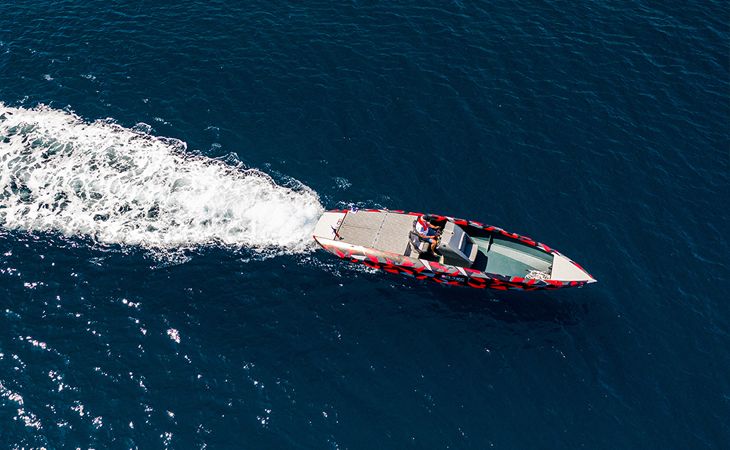
- The tests delivered speeds of 40 knots for the monohull test platform, with 190 nautical miles covered
Creating a pioneering, all-electric marine drive solution takes a lot of belief, technical knowledge and complex innovation – and the route to success is always strewn with challenges that need to be overcome.
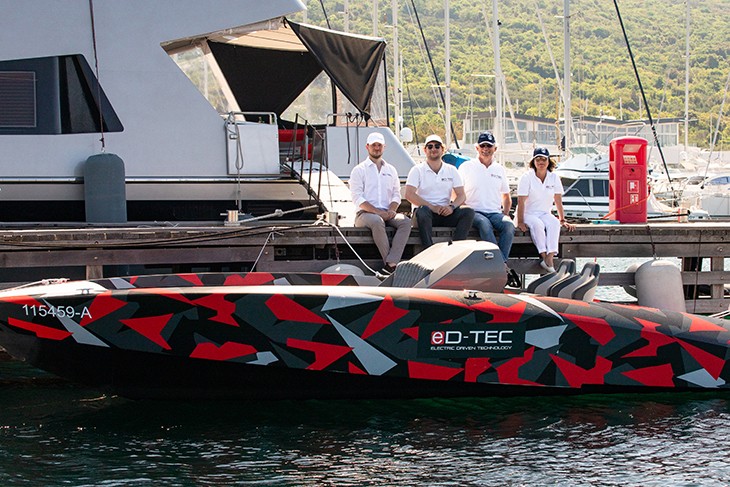
Being the first to do something also means being the first to negotiate the problems, and for the Believer Team at eD-TEC and its partner companies the path has thrown up some interesting challenges around high C-rate battery power, a clever Technology Stack, plug-and-play sterndrive units and high-torque motors that have never been seen in the marine sector before.
After the first phase of static and low speed in-water testing in April and early May, it was time for phase two. It was time to take things up a notch.
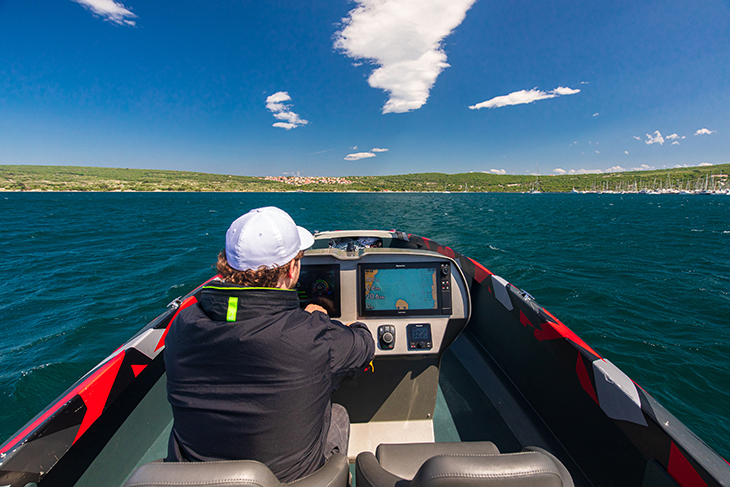
For three weeks in May to the start of June, the eD-TEC Believer Team moved their test monohull from Lake Constance to Marina Punat in Krk, Croatia. The aim of the second phase of trials was simple – to see how the eD-QDrive 1 and the platform performed in the sea and without a speed limit like in previous lake tests, to test the robustness of the system components, and to begin to unleash the full potential of the revolutionary propulsion solution.
“We tested the entire system, from the plug-and-play drive units to the batteries – we’ve been getting more and more power from the batteries while ensuring their longevity and maintaining their health,” enthuses Marc Jost, eD-TEC’s Chief Strategy Officer. “We were also optimising our software that controls the system and the Technology Stack, and we did some endurance testing. In total we covered around 190 nautical miles.”
The big build-up
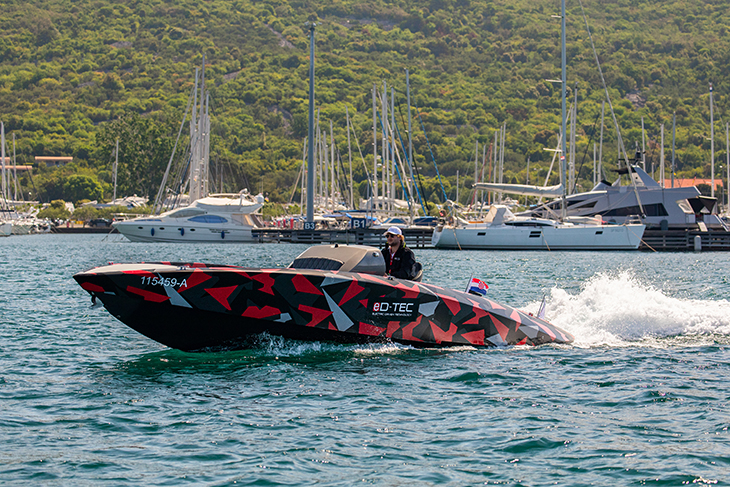
Testing was completed in several stages, starting with a week of low-speed tests to get used to the system and to bed everything in. “We did a lot of running at around six to 10 knots, and then did runs at 500rpm intervals, starting at 500rpm,” Jost says. “We ran each stage of the tests for a long time to make sure all the systems were running well, and after a week of testing we saw that the system was totally stable and reliable, so we upped the programme to test at higher speeds, starting at 25 knots.”
The team achieved a top speed of 40 knots with the motors running well below the maximum power, showing there is plenty of headroom left for even greater top speeds. “Our aim is to reach 50 knots with the monohull, and we haven’t used all the capacity of the batteries and motors yet,” Jost confirms. “This was because at that stage we were still optimising the software so we stayed on the safe side so as not to damage any components – but we still made 40 knots at lower power and with that we are actually rather happy!”
Problem solved
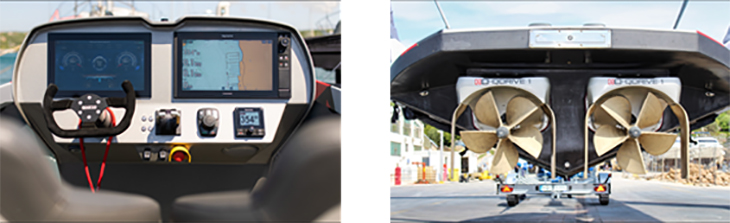
While the first phase of testing had thrown up some technical problems such as electrical noise from high-torque motors – one of the challenges of forging new ground in electro-mobility technologies – the tests in Croatia showed not only that the solutions developed by eD-TEC and their Believer Team of partner companies worked, but also that the overall system is demonstrating significant promise above and beyond design parameters.
“The electrical components don’t have any issues anymore – the tests were completely clean,” says Jost. “Moreover, we also had conversations with the motor manufacturer and we’re getting an upgrade on that too, which will make for a simpler system to mitigate the electromagnetic noise.
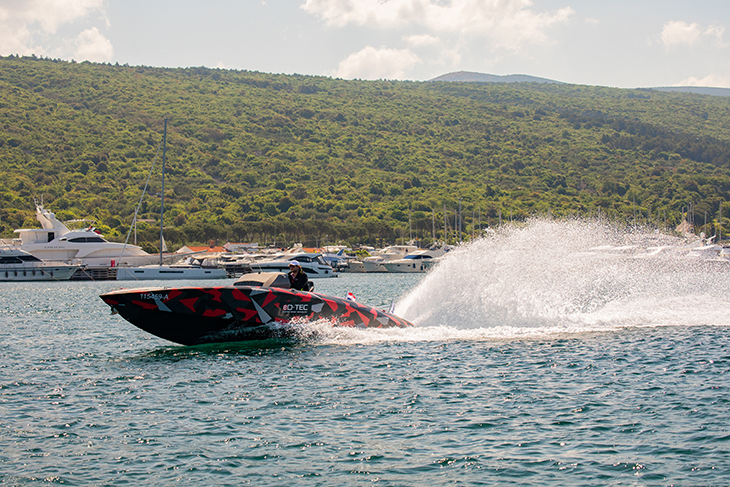
“But overall, apart from returning to Germany once to solve a gearbox problem, we were actually delighted with how everything runs,” Jost continues. “We expected much higher temperatures on the motors and batteries and in the cooling system but they were all very low, which means we have implemented enough cooling power – or maybe a little too much! But that was a rather good surprise.”
Perfect partners
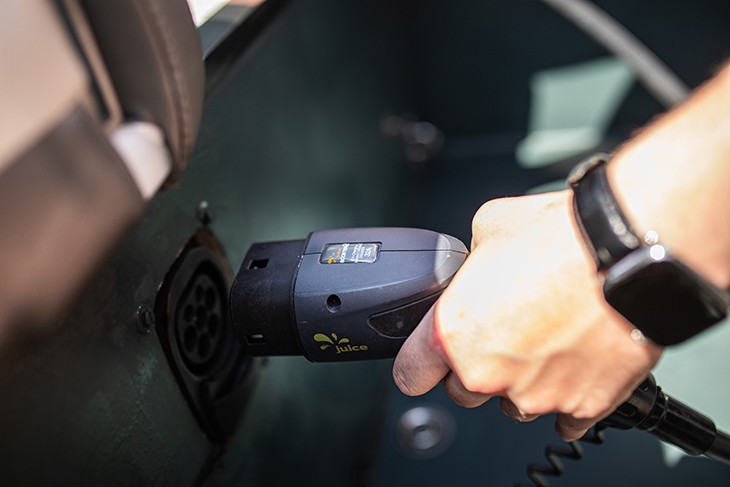
The team also did a lot of charging of the system with 22kW from the marina, which meant the batteries were fully charged in around three hours. Marina Punat gave the team plenty of support by helping with craning the test boat in and out of the water, providing berthing and other support.
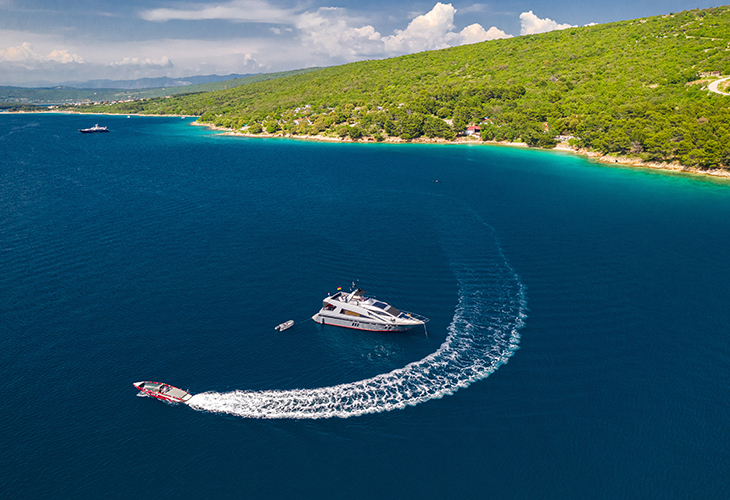
“The marina has a vision for itself, a strategic plan for 2030 to become self-sufficient and green with its power,” Jost explains. “We also had back-up from SeaHelp, which is like roadside assistance for boats – they supplied a patrol boat to accompany the sea trials and provide safety. Both these companies are great examples of the partners and local Believers that eD-TEC attracts.”
With the second phase trials now complete, testing moves into its third phase which will see the eD-QDrive 1 system and technology stack installed on a purpose-built Silent Speed 28 boat where the aim will be to hit a new speed milestone.
"Our team is eagerly anticipating the installation of the eD-QDrive 1 on the Silent Speed 28," Jost concludes. "We are confident that the final product will surpass expectations. It will be a fast, reliable, comfortable boat with a substantial range, operating in virtual silence. Moreover, it will be enjoyable and effortless to use, thanks to the intuitive and ergonomic user interface."
Credit photo - Miro Svetec















© Copyright 2011-2023 - Nautica Report - Reg. Tribunale di Roma n.314 - 27-12-2013 - Editore Carlo Alessandrelli - Un marchio Wave Promotion srls - P.Iva: 12411241008



Ti Potrebbe Interessare Anche
Ecoracer 30: la barca realizzata da NLCOMP® con materiali riciclabili che sostituiscono...
Ecoracer 30, la barca a vela “manifesto” della tecnologia e dei materiali che sostituiscono la vetroresina per rendere una imbarcazione completamente...
Silent-Yachts lancia il primo Silent 62 Trideck a energia solare
Nuovo Silent 62 con 3° ponte aggiuntivo Disponibilità di più layout di ponte Trasmissione elettrica solare ultra-efficiente...
Il Circolo Vela Arco primo club velico FIV con gommoni elettrici sul Garda Trentino...
Una vera transizione ecologica per regate, scuola vela e coaching Con il principio che l’ecosostenibilità deve essere non solo promossa,...
Il primo RIB ad alte prestazioni completamente elettrico eD-TEC eD 32 c-ultra sta...
I pionieri delle prestazioni completamente elettriche eD-TEC presentano il nuovo RIB ad alte prestazioni eD 32 c-ultra, in fase di ultimazione in Germania. eD-TEC,...
Il lago più iconico della Nuova Zelanda riceve il primo traghetto elettrico volante...
Il lago più bello della Nuova Zelanda sta per ricevere un aggiornamento high-tech: Meridian Energy porterà sul lago Manap?uri il primo traghetto...
AS Labruna presenta le ultime innovazioni green al Nauta di Catania
Catania, 7 marzo 2024 - AS Labruna è lieta di annunciare la sua prima partecipazione al Nauta di Catania, in programma da oggi 7 marzo fino a domenica...
Sirena Yachts ha presentato la nuova versione coupé ibrida del Sirena 48
La potenza ibrida efficiente porta le prestazioni silenziose al Sirena 48 Opzione di propulsione ibrida seriale per il Sirena 48 Sovrastruttura...
AS Labruna: al 50° NauticSud il primo gozzo napoletano elettrico alimentato ad idrogeno...
Grande novità al Nauticsud quest’anno. AS Labruna si conferma leader dell’innovazione in campo nautico presentando Futura II e Solemio,...
E-ssence e Navia, accordo per le barche elettriche sbloccabilio via app, le prime...
Barche green che si guidano con o senza patente, elettriche e sbloccabili via App. Partnership tra due start up della blue economy: Navia fornisce le imbarcazioni...